


You've switched products three times this month and everything stings. That "calming" lavender serum? Instant redness. The "unscented" moisturizer? Still irritates your skin. Now you're standing in front of another shelf of products labeled "fragrance-free" and "unscented" wondering which one won't betray you.
Here's the truth the beauty industry doesn't want you to know: these labels aren't interchangeable, they're barely regulated, and when your skin is stressed, the difference between them can mean the difference between healing and making everything worse.
The Annoying Reality: These Terms Mean Different Things
Fragrance-Free: No synthetic or natural fragrances added for the purpose of scent. The product can still smell like something—because every ingredient has a natural odor—but nothing was added to make it smell "good."
Unscented: The product has no noticeable scent. But here's the catch: it often achieves this by adding masking fragrances—additional chemicals specifically designed to neutralize odors from other ingredients.
Read that again. "Unscented" products can contain more fragrance chemicals than products that just smell like their ingredients.
This is the kind of labeling nonsense that makes stressed people with reactive skin want to throw everything in the trash.
Why This Matters More When You're Stressed
When your life is chaos—work deadlines, relationship stress, financial pressure, the general state of everything—your skin knows. Cortisol floods your system, and that cortisol:
-
Weakens your skin barrier (making it more permeable to irritants)
-
Increases inflammation (making existing sensitivity worse)
-
Slows healing (irritation that would normally resolve in days sticks around for weeks)
-
Makes you more reactive (ingredients you tolerated fine before suddenly trigger redness, burning, or breakouts)
Your skin is stress-sensitive. And fragrance, whether synthetic or natural, is one of the most common triggers for already-compromised skin.
Research shows that fragrance ingredients are responsible for more cosmetic-related contact dermatitis than any other ingredient category. When your barrier is already weak from stress, these compounds penetrate deeper and trigger more intense reactions.
The "Natural" Fragrance Trap
"But it's essential oils! They're natural!"
Natural doesn't mean safe. Natural doesn't mean non-irritating. And when your skin is stressed, natural can be just as inflammatory as synthetic.
Essential oils like lavender, peppermint, citrus, and tea tree contain volatile compounds—phenolics, terpenes, aldehydes—that can absolutely cause allergic contact dermatitis, photosensitivity, and irritation.
Yes, some essential oils (like lavender and bergamot) have been shown to reduce cortisol when inhaled. Smelling them in a diffuser? Potentially stress-reducing. Applying them directly to barrier-compromised skin? Different story.
The irony: products marketed for "stress relief" often contain the exact ingredients most likely to stress out your skin.
What PSA Skincare Actually Means by "Fragrance-Free"
We formulate without synthetic fragrances or essential oils added for scent. Period.
LIGHT UP mask? Some people notice a fruity-floral scent. That's the pomegranate ferment, coconut extract, and honeysuckle flower extract—all functional ingredients there for skin benefits, not scent. The slight acidic note comes from the glycolic and lactic acids doing their job. There's also astaxanthin (a powerful antioxidant) which has a naturally earthy scent. Nothing is masked. Nothing is added for fragrance.
We don't add vanilla extract to make it smell like cookies. We don't add lavender oil to make it "spa-like." We don't add masking fragrances to make it smell like nothing.
Why? Because when your skin is stressed, inflamed, or sensitized, fragrance—any fragrance—is an unnecessary risk. Our formulation philosophy is simple: if an ingredient isn't serving a purpose for your skin's biology, it doesn't belong in the formula.
The more straightforward the formula, the easier it is for stressed skin to tolerate. When an ingredient has a natural scent and functional benefits—like pomegranate ferment's brightening properties or honeysuckle's antimicrobial action—we let it smell like what it is.
The Hidden Fragrance Ingredients on Your Labels
Even products claiming to be "fragrance-free" can contain ingredients with fragrance-like properties. Here's what to watch for:
Obvious fragrance indicators:
-
"Fragrance" or "Parfum" (can contain dozens of unlisted compounds)
-
"Essential oil" (lavender oil, tea tree oil, peppermint oil, etc.)
-
"Natural fragrance"
-
"Aroma"
Masking fragrances (in "unscented" products):
-
Linalool
-
Limonene
-
Geraniol
-
Citronellol
-
Citral
These aren't always bad—some appear naturally in plant-based ingredients with other beneficial properties—but when they're listed separately or high on the ingredient list, they're likely there for scent control, not skin benefit.
Plant extracts that can be irritating: Even if not added for fragrance, some ingredients common in "natural" skincare are high in volatile compounds:
-
Citrus extracts (orange, lemon, grapefruit)
-
Mint family (peppermint, spearmint, menthol)
-
Cinnamon bark
-
Eucalyptus
-
Ylang ylang
-
Jasmine
-
Rose (in high concentrations)
PSA Skincare uses centella asiatica, kombucha, and licorice root—botanicals with actual functional benefits for stressed skin—not because they smell nice, but because they work on stress-induced inflammation.
When Fragrance-Free Isn't Enough
Sometimes the issue isn't just fragrance. When your skin is extremely reactive, you might need to eliminate other common irritants:
Denatured alcohol (SD alcohol, alcohol denat.) - drying and sensitizing Harsh sulfates (sodium lauryl sulfate) - strip the barrier High-concentration acids used too frequently - over-exfoliate compromised skin Multiple actives layered incorrectly - overwhelm stressed skin's processing capacity
PSA Skincare formulates without denatured alcohol and uses sulfate-free cleansing systems. Our actives are formulated at effective but tolerable concentrations, often buffered with probiotics.
The goal isn't just fragrance-free. It's stress-free for stressed skin.
Treat the Skin-Brain Connection
Here's what most fragrance-free guides miss: if stress is destroying your barrier and making you reactive, removing fragrance helps but doesn't address the root cause.
Ingredients that address stress-induced inflammation:
-
Centella Asiatica - works on the nervous system to reduce stress response while repairing skin barrier
-
Kombucha - antioxidant protection and microbiome support
-
Niacinamide - strengthens barrier, reduces inflammation, regulates sebum
-
Beta Glucan - calms inflammation, supports immune function
-
Bisabolol - anti-inflammatory without sensitization risk
These ingredients avoid irritation and actively counteract what stress is doing to your skin.
How to Actually Choose Products When Your Skin Is Reactive
Step 1: Read the full ingredient list, not just the front label. "Unscented" and even "fragrance-free" are marketing claims with no legal definition. The FDA doesn't regulate these terms strictly, so brands use them loosely.
Step 2: Look for transparency. Brands that truly formulate for sensitive skin will list every ingredient clearly and explain why each one is there. If the brand is vague about formulation philosophy or hides behind "proprietary blends," that's a red flag.
Step 3: Patch test—even fragrance-free products. Everyone's skin is different, and stress can make you temporarily reactive to ingredients you normally tolerate. Before applying a new product to your whole face:
-
Apply small amount to inner forearm or behind ear
-
Leave on for 24-48 hours
-
Watch for redness, itching, burning, or bumps
If you react, don't use it. Your skin is telling you something.
Step 4: Introduce one product at a time. When your skin is freaking out, your instinct is to throw ten new "calming" products at it. Don't. You'll have no idea what's helping, what's hurting, or what's just... there.
Add one product every 5-7 days. Monitor how your skin responds. If it gets worse, you know exactly what caused it.
Step 5: Prioritize barrier repair over actives. When your skin is sensitized, exfoliating acids and retinols can wait. Focus on:
-
Gentle cleansing (RESET - sulfate-free, nourishing)
-
Hydration (THE MOST - multiple weights of hyaluronic acid, panthenol)
-
Barrier support (VISIBLE IMPROVEMENT - niacinamide, beta glucan, peptides)
Real Talk: What About the Smell?
Fragrance-free products smell like their ingredients. Sometimes that's... not great.
If you're used to products that smell like vanilla cupcakes or tropical vacation, this takes adjustment. But here's the thing: when your skin is inflamed, reactive, and stressed, you're not choosing between "smells good" and "smells weird." You're choosing between "makes my skin worse" and "doesn't."
After a few weeks of using fragrance-free products, most people stop noticing. Your nose adjusts. And when your skin starts healing—less redness, less burning, fewer breakouts—you stop caring what it smells like.
When to See a Dermatologist
Fragrance-free products help, but they're not a cure-all. See a professional if:
-
Your skin reacts to everything, even the simplest formulations
-
You have persistent redness, burning, or itching that doesn't improve with barrier repair
-
You suspect allergic contact dermatitis (specific patterns of redness, blisters, or scaling)
-
Your sensitivity developed suddenly after years of no issues
-
You're experiencing severe stress-triggered flares of eczema, psoriasis, or rosacea
A dermatologist can perform patch testing to identify specific allergens and recommend prescription treatments if needed.
Final Thoughts: Fragrance-Free Is the Bare Minimum for Stressed Skin
When your skin is compromised—from stress, over-exfoliation, environmental damage, or chronic conditions—fragrance of any kind is an unnecessary risk.
"Fragrance-free" means no added fragrance for scent purposes. "Unscented" often means masking fragrances were added. Neither term is legally regulated, so you need to read ingredient lists.
Natural fragrances (essential oils) are just as capable of causing irritation as synthetic ones—sometimes more so. When your barrier is weak from cortisol, even "calming" ingredients can trigger inflammation.
Your skin doesn't need to smell like a spa. It needs to function like healthy skin. And when it's stressed? Simple, fragrance-free, barrier-focused formulations are the only way forward.
Related Posts


-
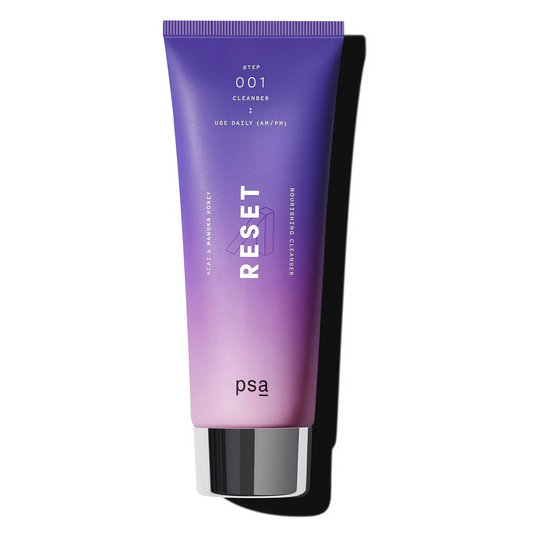 Acai & Manuka Honey Nourishing CleanserRegular price $31.00Sale price $31.00 Regular priceUnit price per
$31.00 USD -
 Awarded:
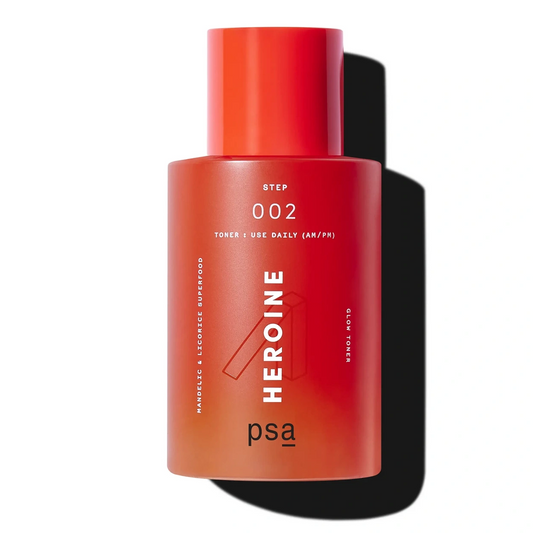
 Mandelic & Licorice Superfood Glow TonerRegular price $36.00Sale price $36.00 Regular priceUnit price per
$36.00 USD -
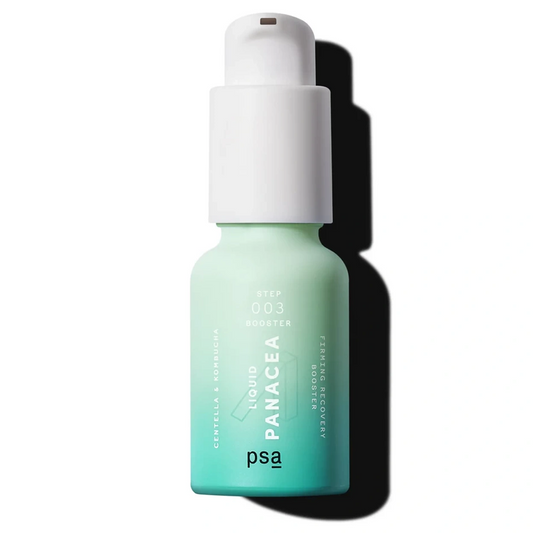 Centella & Kombucha Firming Recovery BoosterRegular price $31.00Sale price $31.00 Regular priceUnit price per
$31.00 USD -
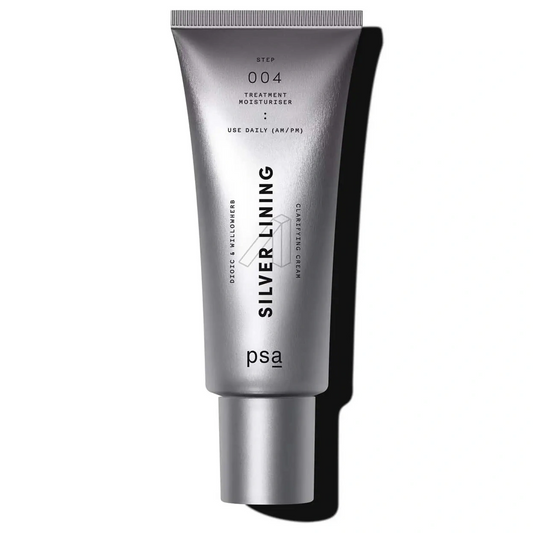 Dioic & Willowherb Clarifying CreamRegular price $38.00Sale price $38.00 Regular priceUnit price per
$38.00 USD

- Choosing a selection results in a full page refresh.
- Opens in a new window.